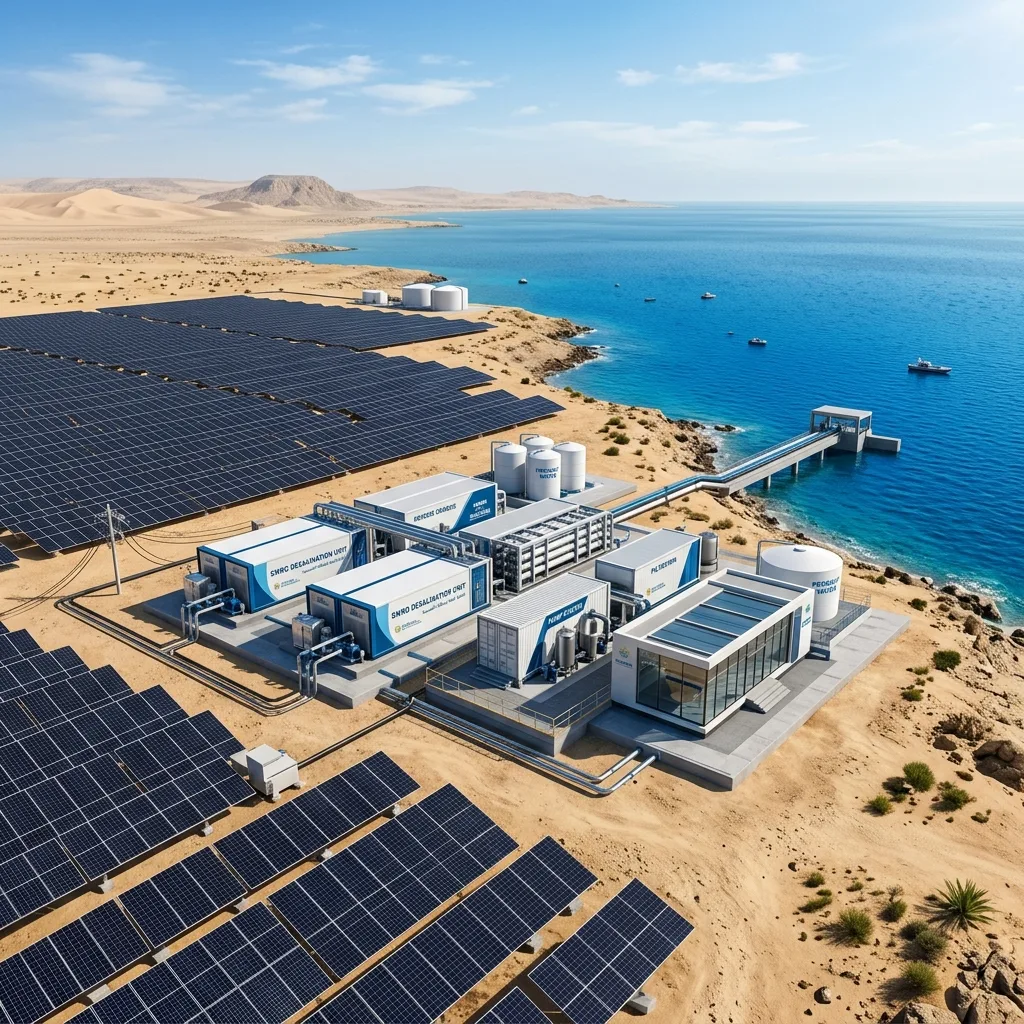
The MENA region is rich in two things: sun and seawater. But it is also limited in two things: fresh water and the future uncertainty of fossil fuels. The natural solution to this equation seems to be solar-powered reverse osmosis systems. However, the reality is a bit more complex than expectations.
1. Why 100% Solar Energy is Not (Yet) Realistic
Fully solar-powered desalination is technically not yet possible on a large scale today. There are three main reasons for this: Night Production: The reverse osmosis process runs 24/7. When the sun goes down, meeting this need with batteries is very expensive with current technology. Consistency Issue: When a cloud passes, the pressure drops, which membranes do not like. Constantly changing pressure shortens membrane life. Investment Cost: The battery capacity required for a fully off-grid SWRO plant can be as expensive as the plant itself.
2. Hybrid Model: The Smartest Solution for Today
We do not give up. The solution is the grid + solar + energy recovery SWRO hybrid model. In this model: During daytime hours, the plant runs on solar energy. Moreover, the hours when the most water is consumed (10:00-16:00) are also the hours of highest solar radiation. At night or on cloudy days, the plant is fed from the grid. With energy recovery devices (ERD), the total energy consumption of the system is reduced by up to 40%. This approach requires 50% lower investment compared to a battery system when a cost analysis of solar energy integration for a large-scale desalination plant is performed.
3. Real World Example: Saudi Arabia and NEOM
Within the framework of Saudi Vision 2030, Saudi Arabia is turning to hybrid systems to meet the water needs of new generation cities. Grid + solar + energy recovery SWRO in Saudi Arabia is one of the most critical investments. The water needs of the NEOM project will be met with solar-powered desalination. Similarly, investors conducting feasibility studies for solar-assisted seawater desalination plants in the Gulf of Aqaba see that they can save 35-40% on electricity bills with the hybrid model.
4. Calculation: What Does a 5000 m³/day Capacity Plant Gain?
A simple scenario: Plant energy consumption: 3.5 kWh/m³, Daily production: 5,000 m³ → 17,500 kWh/day. When approximately 35% of energy consumption is covered by the hybrid solar system, a direct 35% savings is achieved on the plant’s electricity bill. With this savings rate, the system investment pays for itself in a very short time thanks to the reduction in operational expenses. This calculation draws an extremely attractive picture for any investor calculating solar payback period for a 5000 m³/day SWRO plant. The solar hybrid model reduces operational costs in MENA water treatment plants.
Conclusion: Start Smart, Don’t Wait for Perfection
At DipBlueTech, we advocate a hybrid energy model for uninterrupted water production day and night. Fully solar-powered desalination is not yet practical at this scale, so a hybrid solution is the most realistic approach today. While 100% solar may not yet be feasible, achieving a 40–50% solar contribution is both attainable and profitable.