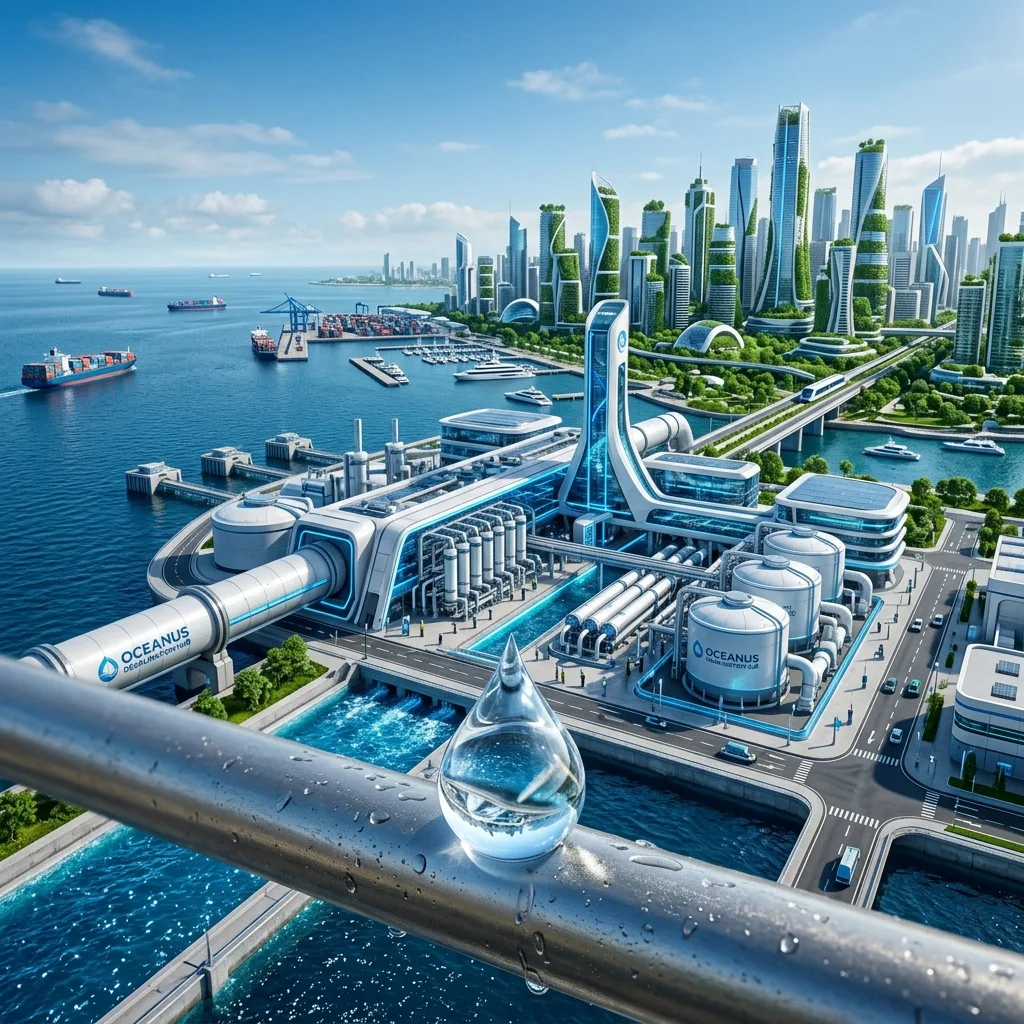
Energy imports are discussed, food security is debated. But what about water? Most countries still treat water as a ‘natural right.’ Yet, when unmanaged, water is an imported risk. Desalination changes this equation; it removes water from being a geographical problem and turns it into a production problem.
1. Water Import: The Invisible Dependency
Many countries do not import water directly but are indirectly dependent: rivers come from other countries, groundwater is depleted, and dams depend on rainfall. These systems are out of control. If it doesn’t rain, there is no water. If policies change, the flow can stop.
2. Desalination: Making Water Producible
Seawater desalination turns water from a resource ‘expected’ from nature into an output produced on demand. This provides resource independence, predictable production, and plannable capacity. The question is no longer ‘will it rain?’ but ‘how much water do we want to produce?’
3. Water Independence = Economic Independence
Industry, agriculture, tourism, and energy sectors depend on water supply. Water interruption means loss of production, increased investment risk, and uncertainty. Desalination eliminates this risk, providing a reliable parameter for investors. Countries with water independence attract more investment and grow stably.
4. To Transport or to Produce?
Transporting water involves high infrastructure costs, energy loss, and political risks. Desalination provides on-site production and a scalable structure, making it a more rational and predictably priced solution in the long run.
5. Strategic Infrastructure: Water is No Longer a Choice
Desalination plants are now in the critical infrastructure category, like power plants and ports. If there is no water, the city, industry, and economy stop. Water production is no longer an option but an infrastructure necessity.
6. Climate Reality: Controlling the Uncontrollable
Climate change makes water resources unpredictable; drought increases, rainfall becomes irregular. Seawater is a constant resource, and desalination makes production controllable, creating the strongest insurance mechanism against climate risk.
7. Future: Water-Producing Countries
In the future, independent and flexible countries will be those that can ‘produce’ water, not just ‘have’ it. Desalination is at the center of this transformation. Water independence is measured by produced capacity, not by reserves.
Conclusion: Water is Not a Resource, but a Capacity
Thanks to desalination, water ceases to be an imported risk and turns into a produced assurance. This is not an engineering decision—it’s a strategic survival decision.