Introduction
While seawater desalination dominates the headlines, brackish water desalination represents a significant, underutilized opportunity. Brackish water—water with salinity between freshwater and seawater—is often more energy-efficient to desalinate and can provide critical water supplies for agriculture and industry.
What is Brackish Water?
Brackish water has total dissolved solids (TDS) between 1,000 and 10,000 mg/L—higher than freshwater (typically <1,000 mg/L) but lower than seawater (approximately 35,000 mg/L). Sources include:
- Brackish groundwater aquifers
- Agricultural drainage water
- Oil and gas produced water
- Effluent from wastewater treatment processes
Advantages of Brackish Water Desalination
- Lower Energy Requirements: Brackish water has significantly lower osmotic pressure than seawater, requiring substantially less energy for reverse osmosis treatment.
- Cost-Effectiveness: Lower energy consumption translates to lower operating costs and improved economic viability.
- Environmental Benefits: Brackish desalination typically produces less brine volume and lower salinity brine, reducing environmental impact.
- Water Security: Tapping brackish resources diversifies water supply portfolios and reduces pressure on freshwater sources.
Innovation: Desalination with Nutrient Recovery
A pioneering approach is “desalination with nutrient recovery (DNR), economically producing irrigation-quality water while recovering valuable nutrients from brackish waters”.
The Approach:
- Separates plant nutrients from phytotoxic NaCl
- Produces water and nutrients suitable for irrigation
- Reduces water and fertilizer importation
- Decreases brine waste and energy use
Key Findings:
Laboratory testing demonstrated that KCl and NaCl salts “effectively regenerated the CIX resin, reducing and facilitating recovery of scale-causing Ca and Mg ions by greater than 99.5%”.
Benefits:
- More sustainable water and nutrient supplies
- Reduced greenhouse gas emissions
- Lower energy consumption
- Enhanced agricultural sustainability
Practical Applications
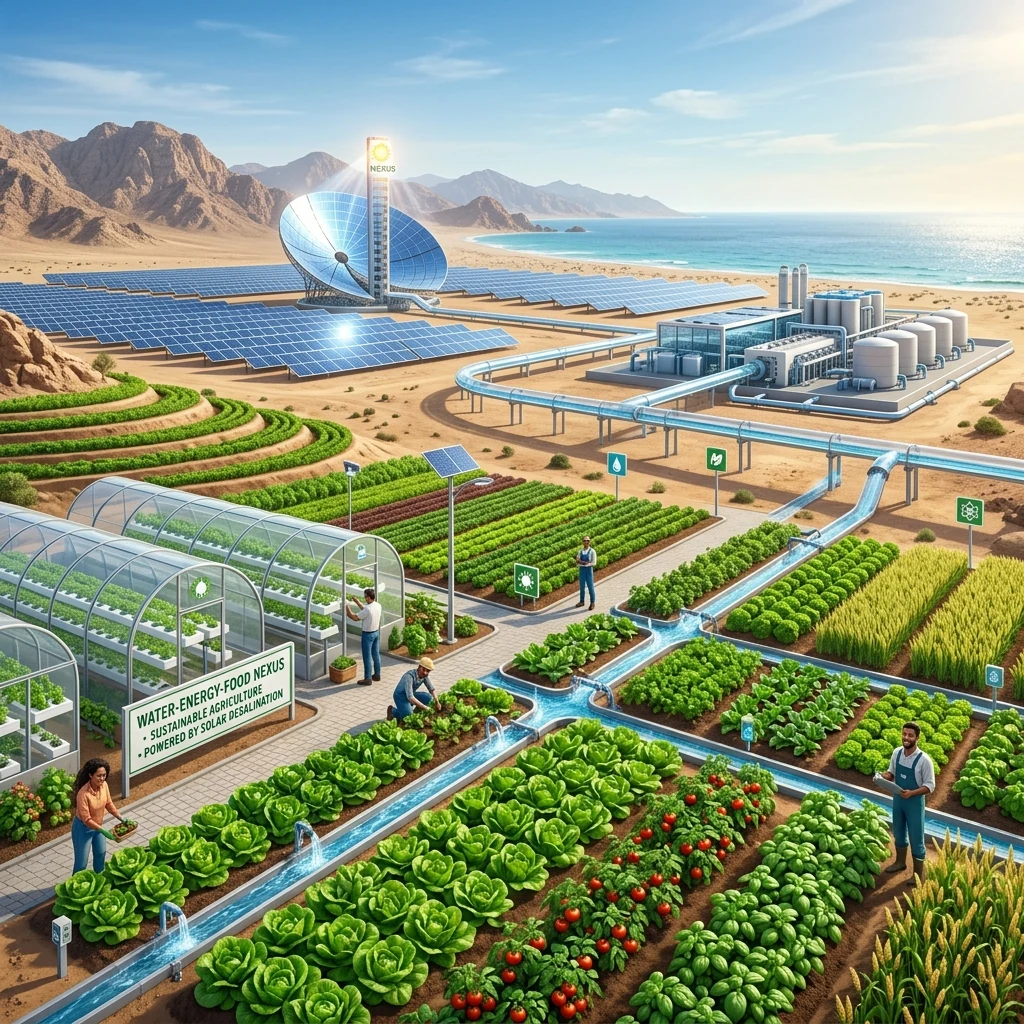
The research emphasizes that “increased utilization of impaired water sources” is required to address water shortages in arid and semiarid regions. The circular economy approach of DNR enables efficient use and reuse of local water and nutrient resources.
Applications for Agriculture
Agricultural applications are particularly promising:
- Irrigation of crops with desalinated brackish water
- Recovery of nutrients for fertilizer use
- Integration with existing irrigation infrastructure
- Reduced soil salinization risks
Conclusion
Brackish water desalination offers significant opportunities for water-scarce regions. With lower energy requirements and innovative approaches like nutrient recovery, it provides a sustainable, cost-effective pathway to enhanced water security for agriculture and industry.