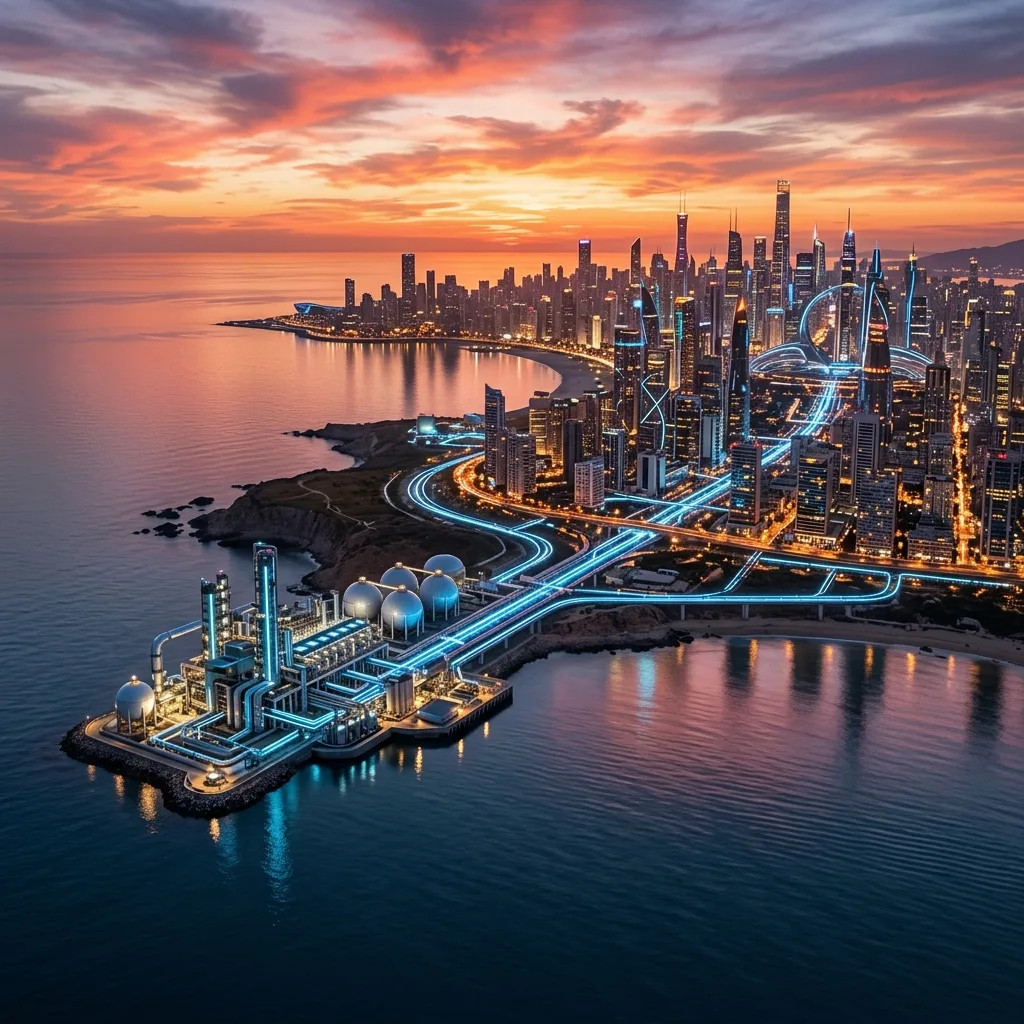
Modern cities and industries must manage water not as an “input” but as a strategic resource. However, water resources are limited, and with climate change, demand is becoming increasingly variable. The solution that comes to the fore at this point is desalination.
1. Variable Demand = Planning Difficulty
Cities and industrial facilities experience daily, seasonal, and annual fluctuations in water demand: industrial production plans, tourism seasons, population growth, and migration. Dams or groundwater resources alone cannot respond to these fluctuations. Result: high risk, water interruptions, and economic losses.
2. Stable Source = Seawater
Seawater is always available. Fluctuations stem not from the source, but from managing the demand. With desalination, water production can be adjusted according to demand, capacity can be increased or decreased, and supply remains predictable and stable at all times. This is a revolutionary advantage in urban and industrial planning.
3. Scalability: Adapting to Demand
Desalination plants are modular: a small-scale initial investment is made, capacity is increased with additional modules if demand rises, and energy-maintenance optimization is achieved. In this way, investment is not wasted on unnecessary capacity, operational risk is reduced, and long-term costs are kept under control.
- Küçük ölçekli başlangıç yatırımı
- Talep artarsa ek modüllerle kapasite artırımı
- Enerji ve bakım optimizasyonu
Bu sayede yatırım; gereksiz kapasiteye harcanmaz, operasyonel risk azaltılır ve uzun vadeli maliyetler kontrol altında tutulur.
4. Critical Role in Industry and Urban Planning
Stable and scalable water supply sustains industrial production without interruption, guarantees customer experience in the tourism sector, and protects quality of life and public services in cities. In short, desalination becomes an indispensable component of modern infrastructure.
5. Resilience Against Climate and Drought
Climate change prolongs droughts, disrupts rainfall patterns, and makes water resources unpredictable. Thanks to desalination, water production becomes climate-independent, continuous, and flexible to demand. This significantly reduces risks and prevents crises.
6. Economic Value: Stable Source, Flexible Demand
Managing a stable source against variable demand is a critical parameter for economic planning: production continuity ensures income stability, uninterrupted water ensures operational trust, and scaling to demand ensures investment efficiency. Thus, desalination not only provides water but guarantees economic stability.
7. Conclusion: The Key to Strategic Infrastructure
Desalination is not just a technology for modern cities and industries; it is a strategic investment, a flexible and scalable solution, and an economic and operational safeguard. Even if demand increases, water supply remains uninterrupted, planning remains secure, and operations remain sustainable.