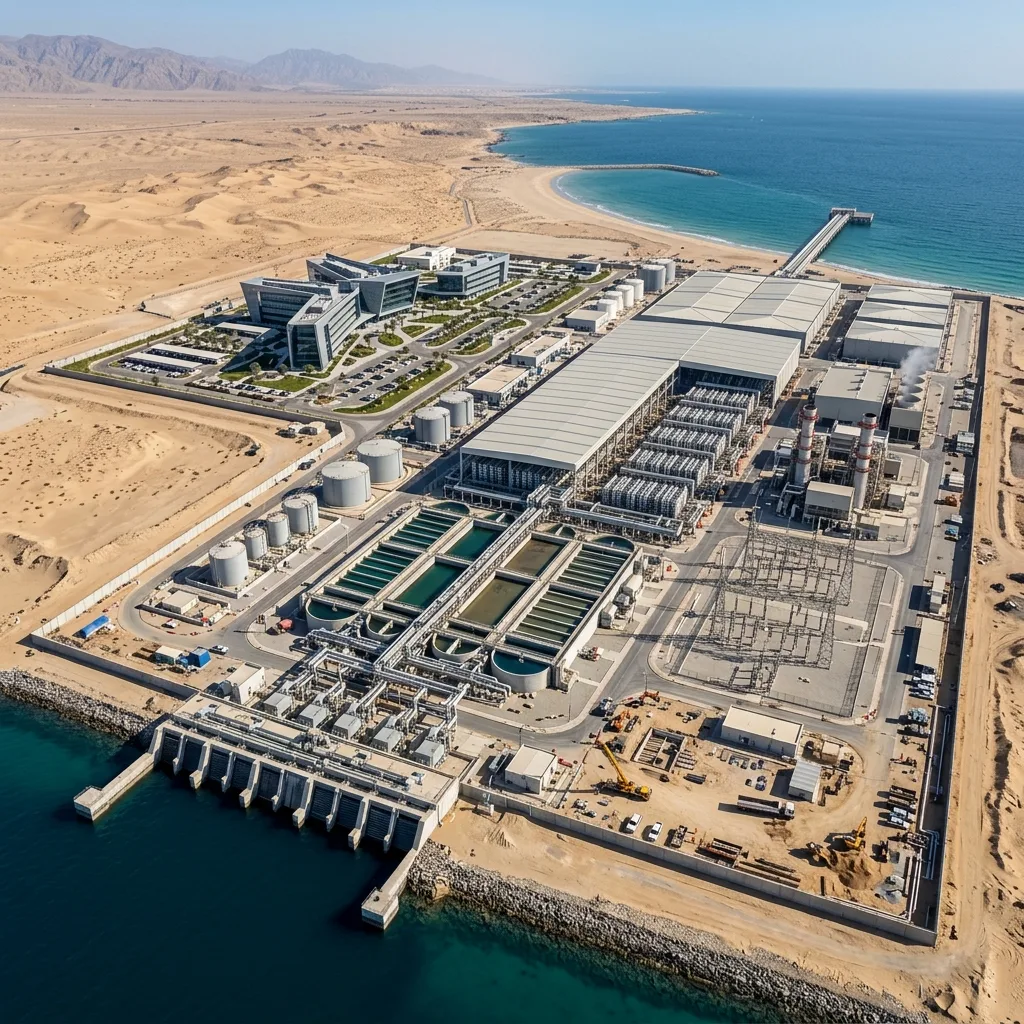
The MENA region is the fastest-growing water treatment market in the world. By 2030, the total desalination capacity in the region is expected to increase significantly. Most of these investments are no longer financed by public budgets, but through private sector partnerships. Models like PPP (Public-Private Partnership) and BOOT (Build-Own-Operate-Transfer) have become the new standard for water infrastructure investments in the region.
1. Public-Private Partnership (PPP) and BOOT Models
Large desalination projects traditionally funded by public budgets are now giving way to Public-Private Partnership (PPP) and Build-Own-Operate-Transfer (BOOT) models. In these models, the private sector undertakes the investment, builds the plant, and operates it for a long period (20-30 years). The government buys all produced water with a take-or-pay guarantee. This cooperation model reduces the capital burden on the state and offers private investors a low-risk, predictable cash flow.
2. Country-by-Country Private Sector Opportunities
Different countries in the MENA region present distinct opportunities: Private sector opportunities in Saudi Arabia are shaped by large-capacity SWRO projects under SWPC, while BOOT model returns in the UAE enjoy high credit ratings and reliable guarantees. In Egypt, PPP frameworks focus on minimizing exchange rate risks by leveraging developmental bank financing.
3. Country and Risk Analysis for Investors
The risk-return balance varies by country. Contract periods generally range from 20 to 30 years, and internal rates of return (IRR) differ based on the country’s risk profile. Key risk items include exchange rate fluctuations, buyer concentration, and regulatory shifts. In this context, the MENA region desalination market size forecast for 2026-2030 shows that investments will continue to grow exponentially.
| Country | Average Contract Period | Typical IRR | Project Size (m³/day) | Key Risk |
|---|---|---|---|---|
| Saudi Arabia | 25 years | %8-10 | 200.000 – 600.000 | Off-taker risk (low) |
| UAE | 25-30 years | %9-11 | 100.000 – 200.000 | Competition (many players) |
| Qatar | 20-25 years | %7-9 | 50.000 – 150.000 | Small market |
| Kuwait | 25 years | %10-12 | 100.000 – 300.000 | Regulatory uncertainty |
| Egypt | 20-25 years | %11-14 | 50.000 – 150.000 | Exchange rate, off-take guarantee |
| Oman | 20 years | %8-10 | 50.000 – 200.000 | Off-taker concentration (single entity) |
4. DipBlue’s Role in PPP Projects
At DipBlue, we serve as the technical partner of consortiums rather than a direct equity investor in large PPP projects. With our EPC (Engineering, Procurement, Construction) and long-term O&M (Operations & Maintenance) services, we commit to completing projects on time and achieving target operational efficiencies, making financing processes easier.
Conclusion: A New Era in Water Investments
Water independence is a matter of national security for MENA countries. Thanks to PPP models, the dynamism and capital of the private sector will continue to play a critical role in rapidly modernizing the region’s water infrastructure.