Introduction
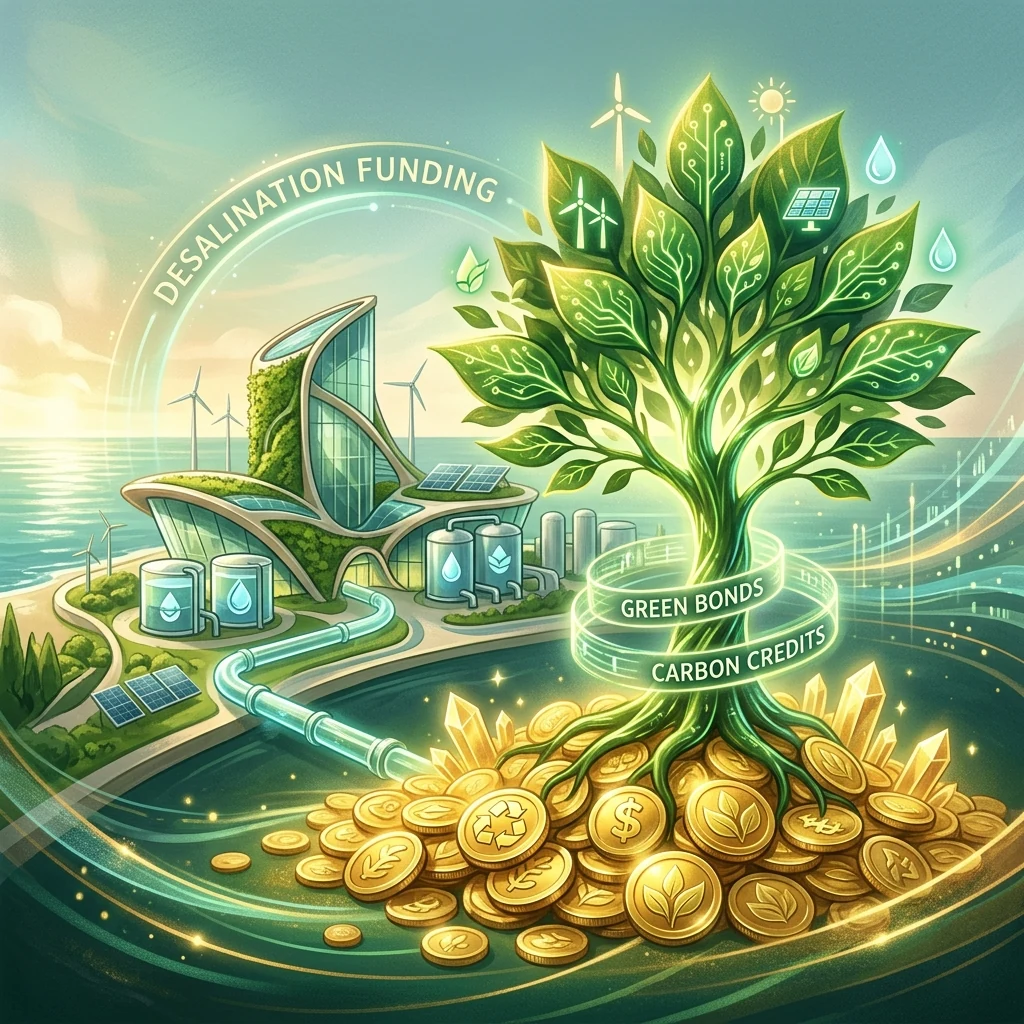
Sustainable finance is no longer a niche concept—it is transforming how desalination projects are funded and operated. Green bonds, carbon credits, and sustainability-linked financing are providing new avenues for capital while driving environmental performance.
The Green Finance Revolution
Around the world, “capital is shifting towards cleaner and more responsible growth,” with investors directing more funds to projects that cut emissions and protect natural resources. For desalination, this creates unprecedented opportunities.
Green Bonds and Sukuk
Green bonds channel funding specifically to environmental projects. In the region, “capital-market rules now allow green and sustainability bonds and sukuk to be issued with confidence”. Benefits include:
- Access to international investors
- Longer maturities
- Better pricing
- Enhanced national reputation
- Job creation in engineering, project finance, and related sectors
Sustainability-Linked Loans
These innovative instruments reward companies with lower borrowing costs when they achieve agreed targets:
- Drop in energy use
- Rise in recycled water
- Emissions reductions
- Water efficiency improvements
Carbon Markets
Carbon markets provide “additional revenue when projects demonstrate verified emissions reductions”. For desalination, this means:
- Monetizing emissions reductions
- Creating financial incentives for efficiency
- Accelerating renewable energy integration
Blended Finance
Combining public, private, and donor capital is particularly effective. Climate Investor Two “successfully supported renewable energy for irrigation, desalination, and water infrastructure projects in climate-vulnerable regions”.
A Framework for Success
For desalination projects seeking green financing:
- Clarity: “Keep the rules practical and stable so companies and banks know exactly what counts as green and which documents are needed”.
- Capability: “Invest in short, targeted training so lenders and borrowers speak the same language and can measure and verify impact with confidence”.
- Pipeline: “Present a visible list of priority projects”—renewables, storage, efficiency in industry, low-carbon logistics.
- Data: Projects must explain how much energy they will save or how many tonnes of carbon they will avoid—and get those numbers independently checked.
- Accountability: Strong disclosure and accountability standards build investor confidence.
Case Studies and Success Stories
- Oman: “An Omani company secured a green loan to finance energy-efficient vessels” by presenting a clear business case and credible plan to cut fuel use and emissions.
- Noor Ouarzazate Solar Complex (Morocco): A PPP-funded renewable energy and water efficiency project demonstrating government-backed risk-sharing.
- UAE: The country is “actively expanding its clean energy infrastructure” and has established a national carbon credit registry under its Climate Change Law.
De-risking and Support
Targeted government support is crucial:
- Sovereign sustainable finance frameworks
- Credit-enhancement facilities
- Guarantees and risk-sharing mechanisms
- Policy-driven financial incentives
Conclusion
Sustainable finance is making desalination more accessible, more affordable, and more environmentally responsible. Projects that embrace green financing mechanisms position themselves for success in an increasingly carbon-constrained world.